Hoodie tech pack quality is measured by how few production decisions remain unclear. A useful pack tells a pattern maker, sample room, material buyer, sewing line, decoration team, quality inspector, and packer what to make, how to measure it, and which approved version controls bulk production.
Quick answer: A factory-ready hoodie tech pack needs a style overview, technical flats, bill of materials, points of measure, base-size specifications, grading, tolerances, construction details, artwork placements, labels, packaging, testing, and revision history. The document should define the product without pretending that one universal hoodie size chart fits every customer.
The measurements in this guide are transparent calculation examples, not recommended commercial sizing. Build final specifications from the target customer, approved fit sample, fabric behavior, and brand block.
What Should a Hoodie Tech Pack Include?
| Section | Minimum information | Decision it controls |
|---|---|---|
| 1. Cover page | Brand, style number, product name, season, owner, date, revision | Document identity |
| 2. Technical flats | Front, back, side or detail views with callouts | Shape and visible construction |
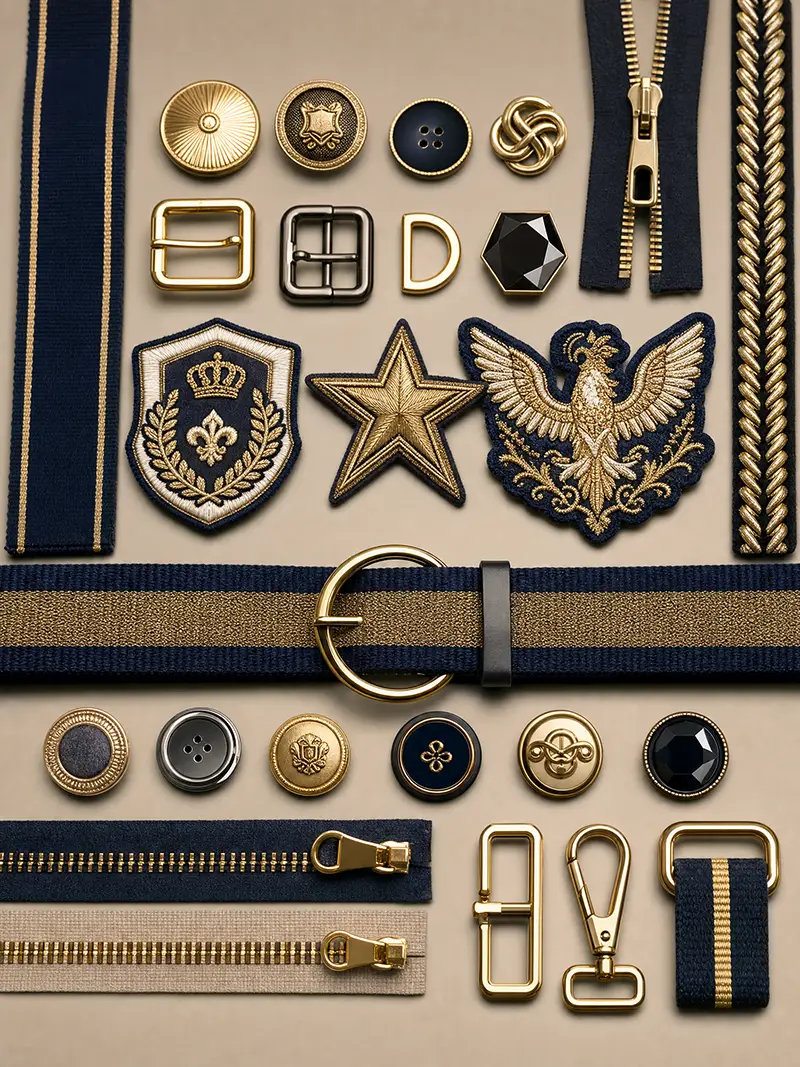
| 3. Bill of materials | Shell, rib, lining, thread, cord, zipper, labels, packaging | What must be sourced |
| 4. Measurement spec | POM code, method, base size, all sizes, tolerance | Fit and inspection |
| 5. Grading | Increment or absolute value at every POM | How the style changes by size |
| 6. Construction | Seams, stitches, reinforcement, edge finish, SPI if controlled | How components are assembled |
| 7. Colorways | Named colors for every material and component | Approved combinations |
| 8. Artwork | File, dimensions, coordinates, colors, technique, approval | Decoration execution |
| 9. Labels and packing | Content, dimensions, placement, fold, bag and carton instructions | Identity and delivery |
| 10. Testing and revisions | Methods, acceptance criteria, comments, status and approver | Evidence and change control |
A mood board, mockup, or reference hoodie can explain direction, but none replaces these production fields. When information is unknown, label it TBC and assign an owner and due date. A blank cell looks accidental; a controlled open item tells the factory not to guess.
Start with Style Identity and Revision Control
Give every style a stable identifier, such as brand code, product family, and sequence. Avoid file names such as “final 2.” Use a revision number or letter, issue date, editor, reason for change, and approval status on every page. Replace obsolete production copies while retaining prior versions for traceability.
Draw Technical Flats That Answer Construction Questions
Show a clean front and back with no pose, perspective, shadow, or styling. Add a side view when hood projection, dropped shoulder, side seam, or pocket volume cannot be understood from the main flats. Enlarge details such as the neckline, hood join, drawcord exit, zipper guard, kangaroo pocket, cuff, hem rib, label stack, and special seam.
Use consistent line conventions and connect each numbered callout to one instruction. State the hood panel and lining construction, pullover or zip-front opening, pocket type, zipper direction, and reinforcement points. A reference photograph should say what it communicates, such as hood stand, shoulder drop, wash character, or seam finish.
Build a Bill of Materials That Can Be Quoted
A bill of materials, or BOM, should identify every physical component and its substitution policy. “Cotton fleece” is not sufficient. Record finished composition, construction, GSM and tolerance, face and reverse, stretch, brushing, dye or wash route, color reference, supplier status, and test requirement.
| Item | Fields to specify | Common omission |
|---|---|---|
| Shell fabric | Composition, knit, finished GSM, color, finish, width | Approval condition |
| Rib | Composition, structure, weight, recovery, color | Shrinkage balance |
| Drawcord | Material, width, length, tip, color | Attachment |
| Zipper | Type, gauge, teeth, tape, puller, length | Tape behavior |
| Thread | Fiber, size if controlled, color, application | Visible color |
| Labels | Type, material, content, size, fold, placement | Artwork revision |
| Packaging | Bag, barcode, sticker, fold, carton limits | Market markings |
Use Dohyee’s custom apparel fabrics page to shortlist material families and the custom apparel accessories page to identify cords, eyelets, zippers, labels, and packaging components.

Separate Body Measurements from Garment Measurements
A body chart describes the intended wearer. A garment specification describes the finished hoodie. The difference between them includes design ease, wearing ease, layering allowance, fabric behavior, and silhouette. Copying a body chest measurement into a half-chest garment POM is a category error.
ISO 8559-1:2017 defines anthropometric measurements used for clothing development. ISO 8559-2:2025 addresses primary and secondary dimension indicators for clothing size designation. These standards support consistent body-measurement language; they do not supply a universal streetwear hoodie pattern.
A flat half-chest of 64 cm gives a simplified 128 cm circumference estimate, but it does not identify the wearer’s chest or intended ease without a defined fit model.
Define Every Hoodie Point of Measure
Each POM needs a code, written method, diagram, unit, garment condition, and reference points. State whether the hoodie is relaxed without stretch, closed or open, face up or back up, and whether rib or hood edges are included.
- Body and chest: define high-point shoulder, hem edge, and chest offset below the armhole.
- Shoulder and sleeve: identify seam endpoints and whether sleeve length starts at shoulder, center back, or HPS.
- Armhole and bicep: define curved or straight measurement and the underarm offset.
- Hood: define height, opening, depth, overlap, and panel alignment.
- Pocket and rib: control dimensions, placement, symmetry, finished depth, opening, and relaxed condition.
Photograph or draw the tape path for ambiguous POMs. A value without a method can produce different results even when two inspectors measure the same garment honestly.
Use a Base Size, Then Grade Each POM Deliberately
Choose the base size that will be sampled and fitted. Grade rules can be shown as size-by-size finished values or increments. Do not apply one percentage to every dimension: chest, body length, hood, pocket, cuff, and artwork may need different rules, including zero grade.
| POM | S | M base | L | Illustrative grade per size |
|---|---|---|---|---|
| Half chest | 62.0 | 64.0 | 66.0 | 2.0 cm |
| Body length from HPS | 69.0 | 70.0 | 71.0 | 1.0 cm |
| Sleeve from shoulder seam | 58.5 | 59.0 | 59.5 | 0.5 cm |
| Hood height | 37.75 | 38.0 | 38.25 | 0.25 cm |
| Cuff rib depth | 7.0 | 7.0 | 7.0 | 0 cm |
Calculation example: If M half chest is 64.0 cm and the grade is 2.0 cm per size, S is 64.0 – 2.0 = 62.0 cm and L is 64.0 + 2.0 = 66.0 cm. The table demonstrates arithmetic only. It is not a Dohyee size chart or a recommended fit.
Do Not Confuse Grade Rules with Tolerances
A grade rule is the intended difference between sizes. A tolerance is the permitted production variation around one target. If M half chest is 64.0 cm with a symmetrical tolerance of +/-1.0 cm, the acceptable interval is 63.0-65.0 cm. A measured value of 65.3 cm is 1.3 cm above target and 0.3 cm beyond that example limit.
Set tolerances by POM, fabric, construction, measurement repeatability, product risk, and supplier capability. Critical fit or alignment points may need different control from long, flexible, or curved measurements. State whether tolerance is symmetrical, whether post-wash values have separate limits, and how many garments are sampled. No single tolerance table is appropriate for every hoodie.
Control Oversized Fit as a Proportion System
An oversized hoodie is not simply a regular hoodie enlarged everywhere. Chest width, shoulder drop, armhole depth, sleeve length, body length, hem opening, hood volume, and rib tension interact. Increasing chest and shoulder without adjusting sleeve can make total reach excessive; widening the body without reconsidering hem rib can pull the silhouette inward.
Fit the base sample on the intended wearer or mannequin and record front, side, and back photographs. Note posture, underlayer, sample size, wearer body measurements, and fabric condition. Review shoulder seam position, sleeve stack, hood pull, pocket access, hem behavior, and balance rather than approving from one front photograph.
The best GSM for hoodies guide explains how construction and finish change drape at equal fabric weight. The custom hoodie manufacturer guide places fit approval inside the wider development process.
Specify Stitches, Seams, and Reinforcement
Write construction instructions next to the drawing. Name or illustrate the seam, identify the stitch class where controlled, and mark topstitch rows, spacing, seam allowance, edge finish, and reinforcement. Hoodie risk areas include pocket corners, drawcord exits, zipper ends, underarms, and cuff joins.
ASTM D6193-16(2025) classifies stitches and seams and notes that seam performance depends on variables including stitch type, seam configuration, thread, stitch density, and fabric. ISO 4916:1991 classifies and illustrates stitched seam types. Referencing a code is useful only when both parties have the same standard and the drawing confirms the intended assembly.
State Fabric Condition and Post-Wash Measurement Rules
Specify whether measurements and GSM apply to greige fabric, dyed fabric, finished fabric, unwashed garment, garment-washed sample, or post-care garment. For washed streetwear, the approved finish can change dimensions, shade, hand, seam appearance, rib recovery, and artwork placement.
Dimensional change (%) = (after-treatment measurement – before-treatment measurement) / before-treatment measurement x 100
If a body length moves from 70.0 cm to 68.6 cm, the result is (68.6 – 70.0) / 70.0 x 100 = -2.0%. The negative sign indicates shrinkage for that POM. One result does not describe the chest, sleeves, hood, rib, or every garment in a lot.
ISO 3759:2011 covers preparation, marking, and measuring for dimensional-change tests. AATCC TM150-2025 addresses dimensional changes of garments after home laundering. Agree the exact procedure, number of cycles, drying route, conditioning, measurement points, and acceptance criteria before testing. For finish planning, see the garment washing techniques guide.
Give Artwork Its Own Placement Specification
Keep editable artwork separate from the main tech-pack PDF, but list its file name and revision in the pack. Define finished width and height, named colors, technique, location, and coordinates from stable points such as center front, high-point shoulder, neckline seam, cuff, or pocket edge. State the grading rule: fixed size, multiple artwork sizes, or controlled repositioning by garment size.
A front mockup is not a placement spec because its scale may change when exported. Dohyee’s screen printing vs embroidery guide details strike-offs, sew-outs, cost drivers, and decoration QC.
Connect Labels, Packaging, and Destination Requirements
Provide artwork and content for main labels, size labels, care labels, country-of-origin information, hang tags, barcode stickers, bags, and cartons. Specify dimensions, fold, material, color, placement, attachment, and language. Do not ask a factory to invent legally significant label content.
For the U.S. market, the FTC Textile Fiber Rule summarizes requirements for fiber content, responsible business identity, and country of origin. The FTC Care Labeling Rule requires covered manufacturers and importers to provide care instructions supported by a reasonable basis. Requirements differ by destination; obtain appropriate compliance advice for the markets where the hoodie will be sold.
Use the custom clothing labels and packaging guide to build the corresponding approval fields.
Turn Sample Comments into Measurable Revisions
Write one issue per line. Replace “hood looks wrong” with an observation, required action, and updated specification. Attach annotated images and update the affected page.
- Measure the received sample using the pack’s method.
- Record actual results beside target values, not in a separate informal message.
- Classify fit, construction, material, and workmanship issues.
- Issue a new revision, highlight changes, and name the next sample stage.
- Keep one sealed or signed reference when the sample is approved.
Pre-Quote Hoodie Tech Pack Checklist
- Style number, product description, size range, base size, target customer, market, and deadline.
- Front, back, and necessary detail flats with numbered construction callouts.
- BOM with shell, rib, lining, thread, trims, labels, packaging, and approved substitutions.
- POM diagram, methods, finished values by size, units, tolerances, and garment condition.
- Fit reference, wearer or mannequin information, grade rules, and oversized-fit intent.
- Colorway table linking every material, trim, thread, artwork, and label color.
- Decoration files, dimensions, placements, processes, and sample approval route.
- Wash sequence, test methods, care basis, inspection requirements, and acceptance criteria.
- Quantity by color and size, acceptable order variance, delivery destination, and packing plan.
- Revision log with open items, owner, due date, and approval status.
For supplier qualification and quotation comparison, read the custom streetwear manufacturer guide.
FAQ About Hoodie Tech Packs
What is a hoodie tech pack?
It is the controlled production specification for one hoodie style, covering drawings, materials, measurements, grading, construction, artwork, labels, packaging, testing, and revisions.
Do I need measurements for every hoodie size?
Bulk production needs controlled finished values for every offered size. These can be shown directly or generated from approved base-size values and explicit grade rules.
Can a manufacturer create the tech pack for me?
Some manufacturers offer development support, but the brand must still approve fit, materials, appearance, labeling, and commercial requirements. Clarify ownership of patterns and files.
What is the difference between a spec sheet and a tech pack?
A spec sheet may contain measurements and a basic drawing. A complete tech pack also controls materials, construction, colors, artwork, labels, packaging, testing, and revisions.
What measurements are essential for an oversized hoodie?
Chest, shoulder, body length, sleeve, armhole, bicep, hem, rib, hood, and pocket are common controls, but each needs a brand-specific method and proportion review.
Should measurements be before or after garment washing?
State both when both matter. Clearly identify the final approval condition and use a defined care or garment-wash procedure for post-treatment values.
How should hoodie tolerances be selected?
Select them by POM risk, material, construction, measurement repeatability, supplier capability, and inspection plan. Do not copy one tolerance across the entire chart.
When is a hoodie tech pack ready for bulk production?
It is ready when the pre-production sample, materials, measurements, colors, construction, artwork, labels, packaging, tests, and latest revision are approved with no uncontrolled open items.
Primary References
- Body measurement definitions: ISO 8559-1:2017.
- Clothing size indicators: ISO 8559-2:2025.
- Stitches and seams: ASTM D6193-16(2025) and ISO 4916:1991.
- Dimensional-change measurement: ISO 3759:2011 and AATCC TM150-2025.
- U.S. labeling: FTC Textile Fiber Rule and FTC Care Labeling Rule.
Send a Comparable Hoodie Development Brief
Ask each supplier to review the same current revision and identify assumptions before quoting. Send the technical pack, editable artwork, reference sample or photographs, target quantities by color and size, destination, required tests, packaging, and timeline. Request an itemized list of open questions, proposed substitutions, sample stages, and approval evidence.
Dohyee’s OEM streetwear service page outlines the development route. Submit the hoodie tech pack or initial design brief through the Dohyee contact page for a feasibility review.