Custom Sweatshirt Manufacturer in China: Fabric, Fit, Sampling and QC Guide
A capable custom sweatshirt manufacturer does more than sew a ribbed neck onto a fleece body. The manufacturer has to control pattern balance, shoulder shape, fabric weight, neck opening, rib recovery, garment wash, artwork placement, labels, sample revisions, and bulk consistency. This guide helps streetwear brands and apparel buyers evaluate low MOQ OEM/ODM crewneck sweatshirt production in China without reducing the decision to price alone.
Answer in brief: Choose a custom sweatshirt manufacturer that can explain how it will develop the pattern, confirm the finished fabric, test the rib and garment after laundering, approve decoration on the actual material, measure the pre-production sample, and inspect bulk units against one dated specification. Give each supplier the same technical brief so quotations and samples can be compared fairly.
| Buyer decision | What to define | What to approve |
|---|---|---|
| Silhouette | Regular, oversized, boxy, cropped, drop shoulder, or mock neck | Fit sample on a suitable model plus a measured report |
| Fabric | Composition, finished GSM, knit structure, face, back, color, and finish | Swatch, garment sample, and agreed wash-test result |
| Rib | Composition, width, stretch, recovery, attachment, and finished opening | Neck, cuff, and hem appearance before and after laundering |
| Artwork | Technique, size, color, placement, texture, and backing | Strike-off and decorated garment on production fabric |
| Commercial scope | Quantity, colors, size ratio, labels, packaging, destination, and deadline | Itemized quotation and milestone-based production plan |
| Quality | Tolerances, test conditions, appearance limits, inspection, and remedies | Pre-production standard and final inspection evidence |

What Is the Difference Between a Sweatshirt Factory and a Blank Supplier?
A blank supplier offers a pre-developed garment that can usually accept printing, embroidery, or labels. A cut-and-sew sweatshirt factory develops a garment around the buyer’s measurements, materials, construction, and finishing requirements. Both models can be useful, but they solve different problems.
Blanks may suit a fast merchandise release where the body shape is already acceptable. Cut-and-sew development is more suitable when the brand needs a proprietary oversized fit, an unusual sleeve shape, a specific neck opening, custom rib, a washed finish, panel construction, special pockets, or a coordinated collection. The buyer should clarify which model is being quoted before comparing prices.
Internal resource: Review Dohyee’s custom sweatshirt category for current product directions and the custom OEM streetwear service for the wider development process.
Begin With the Silhouette, Not the Artwork
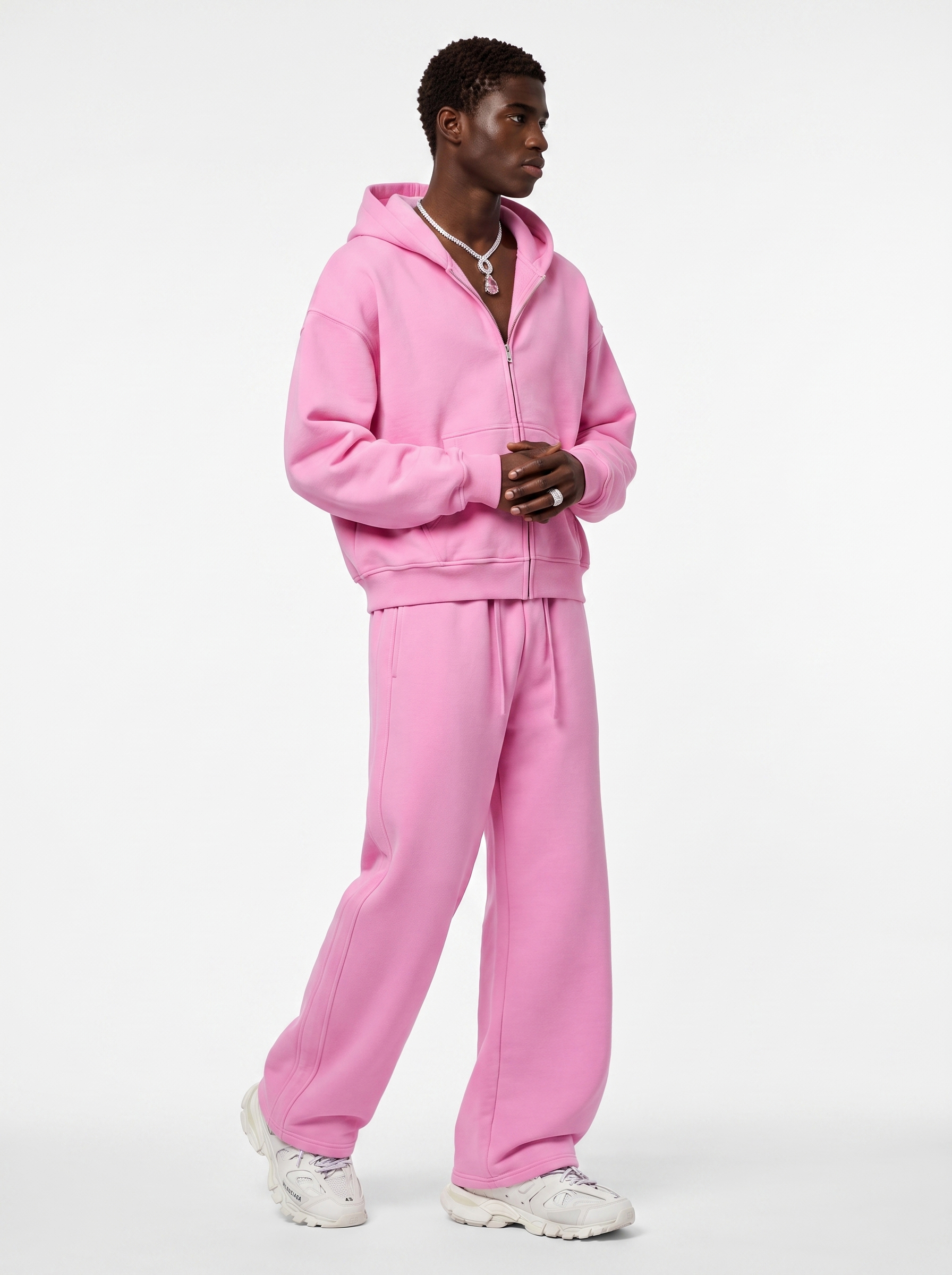
Customers feel the fit before they inspect the print. A sweatshirt can measure wide in the chest and still fail to look oversized if the shoulder, sleeve, armhole, body length, and rib tension do not work together. Start by describing the intended wearer, styling, layering, season, and retail position. Then translate the visual direction into measurable points.
| Sweatshirt fit | Typical design intent | Development point to watch |
|---|---|---|
| Regular crewneck | Core basics, uniforms, merchandise, and repeat programs | Neck comfort, shoulder balance, and stable grading |
| Oversized drop shoulder | Streetwear, unisex collections, and layered outfits | Shoulder drop, sleeve pitch, body length, and excess bulk |
| Boxy heavyweight fit | Premium streetwear and structured silhouettes | Body-to-length proportion, hem rib tension, and fabric stiffness |
| Cropped sweatshirt | Fashion collections and matching sets | Finished length after washing and hem behavior on-body |
| Mock-neck sweatshirt | Cold-weather products and elevated casualwear | Neck stretch, recovery, height, comfort, and head opening |
At minimum, define body length, chest width, shoulder width, sleeve length, bicep, cuff opening, armhole depth, neck width, front neck drop, back neck drop, and bottom opening. State how every point is measured and whether dimensions are taken with the rib relaxed. For a unisex sweatshirt, test the base size on the intended body range instead of assuming that one proportion suits everyone.
Useful approval rule: Fit is approved twice: first as an on-body silhouette, then as a set of recorded measurements. One does not replace the other.
How Should a Brand Choose Sweatshirt Fabric and GSM?
GSM means grams per square meter. It describes fabric mass per area, but it does not by itself describe warmth, durability, softness, shrinkage, drape, or quality. Two fabrics at the same GSM can perform differently because of fiber content, yarn size, knit density, brushing, compacting, dyeing, and other finishes.
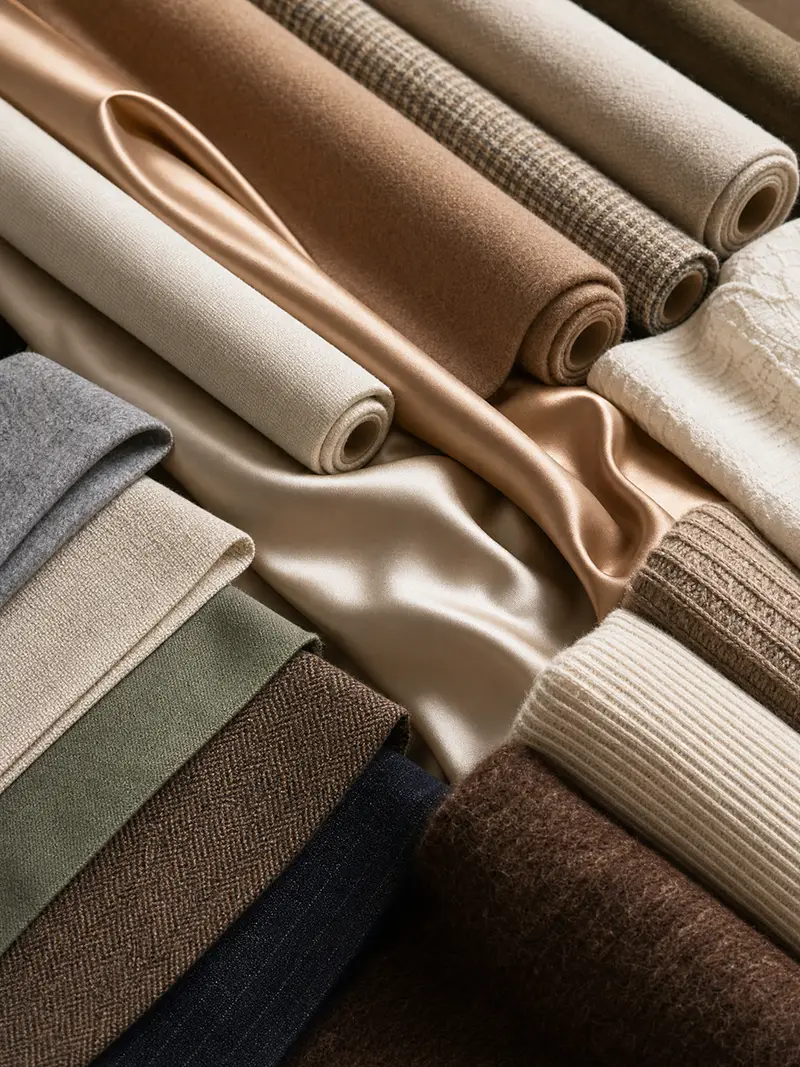
French terry has loops on the back and is often chosen for a cleaner, less brushed interior. Fleece has a raised inner surface and is commonly selected when warmth and softness are priorities. Cotton-rich fabrics can create a natural face and substantial hand feel. Polyester or other fibers may be introduced for stability, recovery, performance, or cost. Ask what the finished garment needs to do before choosing a composition.
| Planning range | Possible sweatshirt direction | Question the swatch must answer |
|---|---|---|
| About 260-320 GSM | Midweight crewnecks, layering pieces, and transitional programs | Does the fabric have enough opacity and recovery for the intended fit? |
| About 320-400 GSM | Substantial everyday sweatshirts and washed streetwear | How do drape, shrinkage, seam bulk, and drying change after finishing? |
| About 400-460 GSM | Heavyweight crewnecks and structured premium products | Will the garment remain comfortable, and can rib and seams support the weight? |
These ranges are development starting points, not universal quality grades. Confirm whether the quoted GSM refers to greige fabric, dyed fabric, or finished fabric. Approve the actual production-quality material and agree on a test method and tolerance.
Internal resource: Dohyee’s custom apparel fabrics page presents French terry, fleece, jersey, twill, and other apparel fabric directions.
External certification reference: OEKO-TEX STANDARD 100 concerns testing textile products for harmful substances. Treat any certification claim as document-specific: verify the certificate holder, scope, product class, article coverage, and validity before using the claim in product marketing.

The Neck Rib Is a Small Component With a Large Failure Risk
Necklines attract attention because they frame the face and are handled every time the garment is worn. A loose, wavy, tight, twisted, or stretched neckline can make an otherwise good sweatshirt look inexpensive. The rib must be compatible with the body fabric, neck shape, seam allowance, attachment method, and wash process.
Specify rib composition, rib structure, finished width, color, stretch direction, and relaxed opening. Ask how the rib’s cut length is calculated relative to the neckline seam. Too much tension can cause puckering or discomfort; too little can leave a wavy opening. For a mock neck, also check whether the opening stretches enough to pass over the head and returns without permanent deformation.
The same thinking applies to cuffs and bottom bands. A tight hem rib can pull a boxy body inward and change the silhouette. Weak cuff recovery can make sleeves look worn after limited use. Approve the complete garment after the agreed laundering process rather than approving rib and body fabric only as separate swatches.
Vintage Washes Need an Approved Range, Not One Perfect Photo
Garment dye, pigment dye, vintage wash, spray effects, and distressing can create attractive depth, but they also introduce variation. Seams, folds, rib, embroidery, and high-abrasion areas may react differently. The buyer and factory should distinguish intended character from unacceptable inconsistency.
Keep a physical target sample under controlled storage. Where natural variation is expected, approve lighter and darker boundary samples. Record acceptable contrast at the collar, cuffs, hem, seams, and artwork. Use consistent lighting for review and identify production lots so a problem can be traced rather than mixed across the shipment.
Wash approval should happen on the final fabric and construction whenever possible. Changing the body fabric, rib, thread, decoration, or wash recipe after approval can change both color and dimensions. For matching sets, review the sweatshirt and sweatpants together because buyers will notice shade differences when the pieces are worn side by side.
Match Printing and Embroidery to the Fabric Structure
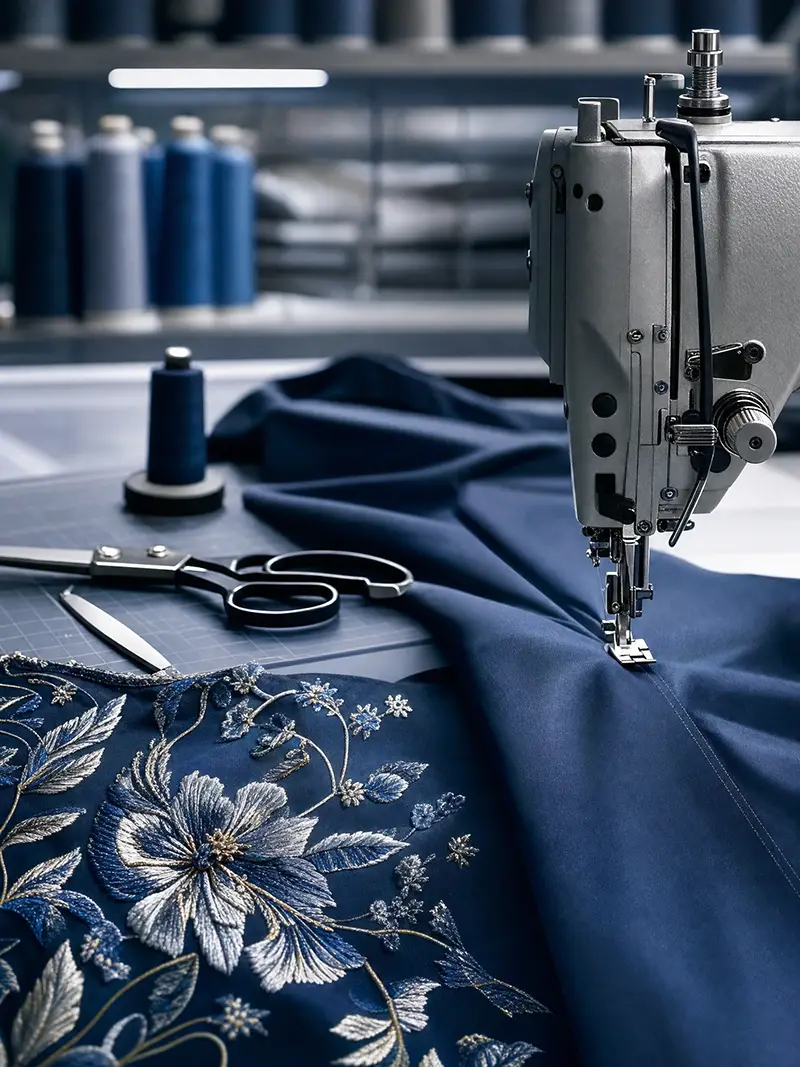
A decoration that works on smooth jersey may not behave the same way on brushed fleece or textured French terry. Thick, soft fabric can reduce fine print definition. Dense embroidery can compress or distort the body. A large applique can change drape. Puff print, silicone, heat transfer, screen print, and embroidery all have different limits for detail, stretch, hand feel, and care.
Provide vector artwork where possible. State the finished width and height, color reference, placement from stable garment points, technique, surface, backing, and acceptable texture. Approve a strike-off for color and technique, then approve the artwork on the actual sweatshirt material. If artwork crosses a seam or approaches the rib, ask for a construction sample because positioning tolerances and bulk can affect the result.
Internal resource: Compare printing, embroidery, applique, rhinestone, sublimation, and related methods on Dohyee’s technics solutions page.
Build a Sweatshirt Tech Pack That Can Be Inspected
A useful tech pack does not only describe the design. It defines what the factory will make and what the quality team can verify. Every revision should have a date or version number, and superseded pages should be removed from active production files.
| Tech pack section | Information to include | Control record |
|---|---|---|
| Technical drawings | Front, back, inside, seam, neck, cuff, hem, panel, and pocket details | Dated drawing revision |
| Bill of materials | Body, rib, pocketing, thread, tape, labels, trims, and packaging | Approved swatches and component references |
| Measurements | Points of measurement, base size, grade rules, tolerances, and method | Measured sample report |
| Color and finish | Color standard, dye or wash direction, surface, and acceptable range | Approved target and boundary samples where relevant |
| Artwork | File, technique, color, dimensions, placement, backing, and finish | Strike-off and decorated garment approval |
| Labels and packing | Content, dimensions, placement, folding, poly bag, barcode, and carton mark | Label proof and packing mockup |
| Testing and inspection | Methods, conditions, limits, sampling plan, defect classes, and remedies | Test and inspection reports |
Internal resource: Dohyee’s custom streetwear manufacturer guide provides broader context for comparing factory capabilities.
Use Each Sample Stage to Answer a Different Question
The sample sequence should reflect the risks of the design. A first prototype checks pattern and construction. A fit sample confirms silhouette and measurements. A wash trial or lab submission checks color and finish. A print or embroidery strike-off checks the artwork technique. A pre-production sample should represent the approved bulk specification as closely as practical.
Complex programs may also use a size set to verify grading and a production sample to confirm the manufacturing line. The names used by factories vary, so define the purpose of each sample in writing. Do not assume that “sample approved” means fabric, fit, wash, artwork, labels, and packaging were all approved at once.
Comments should be measurable. Replace “make the sleeves better” with a recorded change such as “reduce bicep width by 1.5 cm at the stated measurement point while keeping the cuff opening unchanged.” Update the tech pack after every accepted correction.
How Low MOQ Sweatshirt Pricing Actually Works
A factory cannot give a meaningful low MOQ without understanding the material and process. Minimums may come from fabric knitting or dyeing, rib development, garment wash batches, printing setup, embroidery setup, custom labels, packaging, or production-line efficiency. Ask which component determines the minimum and whether quantities can be combined across sizes, colors, or artworks.
For a startup, using an available fabric and rib can reduce development risk. Limiting the first order to one body, fewer colors, and carefully chosen decorations can make sampling and bulk control easier. That does not mean the simplest product is always the cheapest: heavyweight fabric, garment washing, dense embroidery, unusual rib, multiple labels, and individual packaging can add cost even when the order is small.
Request an itemized quotation that identifies:
- Pattern or development charges
- Sample cost and the number of revisions included
- Fabric composition, finished GSM, color, and unit basis
- Rib, washing, printing, embroidery, applique, or other process charges
- Labels, hang tags, barcodes, poly bags, and carton costs
- Testing and inspection scope
- Payment terms, trade term, freight scope, and destination charges
RFQ wording: “Please quote the attached sweatshirt by color and size quantity. State the finished fabric composition and GSM, rib specification, sample stages, MOQ basis, wash and decoration charges, label and packing costs, testing, bulk lead time after approval, payment terms, and shipment scope.”
Quality Control for Crewneck and Mock-Neck Sweatshirts
Final inspection cannot repair an uncontrolled development process. Quality starts when the buyer and manufacturer agree on materials, measurements, tolerances, test conditions, appearance limits, and approved samples. In-line checks should focus on risks that become expensive to correct after the garment is finished.
| Control point | What to inspect | Common failure prevented |
|---|---|---|
| Body fabric | Composition, finished GSM, color, face, back, lot, and hand feel | Material substitution and inconsistent panels |
| Neck and rib | Opening, width, seam, symmetry, stretch, recovery, and waviness | Tight openings, stretched necks, and puckering |
| Measurements | Critical dimensions before and after the agreed treatment | Short bodies, sleeve change, twisting, and size inconsistency |
| Construction | Seam type, stitch security, skipped stitches, symmetry, and bulk | Open seams, discomfort, and distorted panels |
| Wash appearance | Shade, seam contrast, marks, rib match, stains, and lot consistency | Uncontrolled variation and mismatched sets |
| Decoration | Color, dimensions, placement, adhesion, tension, and post-wash surface | Cracking, peeling, distortion, and misplaced artwork |
| Presentation | Labels, hang tags, folding, barcode, bag, size ratio, and carton mark | Compliance, retail, and fulfillment errors |
External testing references: ISO 3759:2011 addresses preparing, marking, and measuring textile specimens and garments for dimensional-change tests. ISO 6330:2021 specifies domestic washing and drying procedures for textile testing, while ISO 5077:2007 covers determining dimensional change. The buyer, factory, and laboratory still need to agree on the exact procedure and acceptance limits for the product.

Private Labels Must Match the Destination Market
Brand labels, size labels, fiber information, care instructions, country-of-origin marking, hang tags, and packaging should be included in development rather than added at the end. Confirm label wording and placement for every selling market. Do not copy another brand’s label or make a fiber, origin, safety, sustainability, or certification claim without supporting records.
For products sold in the United States, the Federal Trade Commission explains that most textile products require labels identifying fiber content, country of origin, and the manufacturer or another responsible business. Covered apparel also needs care instructions under the Care Labeling Rule. The importer or brand should verify the rules that apply to the exact product.
Internal resource: Review label, hang-tag, trim, and packaging directions on Dohyee’s custom apparel accessories page.
External regulatory reference: See the FTC’s official clothing and textiles guidance and Care Labeling Rule compliance guide.
Supplier Warning Signs and the Evidence That Resolves Them
| Warning sign | Why it creates risk | Evidence to request |
|---|---|---|
| Instant quote from one reference photo | Fabric, construction, quantities, labels, and quality scope are unknown | Written assumptions and a revised itemized quote after technical review |
| GSM presented as the complete fabric specification | Composition, knit, finish, and performance remain undefined | Full fabric specification, swatch, and relevant test result |
| Wash described as “exactly like the photo” | Natural variation and acceptance limits are not controlled | Physical target, boundary samples, and written rejection criteria |
| No measured sample report | Pattern corrections and tolerances cannot be traced | Dated report tied to the sample and tech-pack revision |
| Certification logo without matching documents | The certificate may not cover the product, material, or supplier | Certificate number, holder, scope, validity, and transaction evidence where applicable |
| Lead time with no approval milestones | Material, sample, testing, and buyer delays are hidden | Milestone plan with responsibilities and approval deadlines |
FAQ About Custom Sweatshirt Manufacturing
What is a custom sweatshirt manufacturer?
A custom sweatshirt manufacturer develops and produces crewnecks, mock necks, cropped sweatshirts, oversized sweatshirts, and related styles to a buyer’s specification. Services may include pattern making, fabric sourcing, custom rib, sampling, garment washing, printing, embroidery, private labels, packaging, and quality control.
Can a startup order low MOQ custom sweatshirts?
Yes, when the fabric, colors, wash, decoration, labels, and packaging allow a workable minimum. Ask whether the MOQ applies to the style, fabric, color, artwork, or total order. Using available materials and limiting first-drop variations can improve flexibility.
What GSM is best for a heavyweight sweatshirt?
Many heavyweight projects begin around 380-460 GSM, but no GSM automatically guarantees quality. Select the finished fabric by composition, structure, hand feel, warmth, drape, shrinkage, sewing performance, care result, and target price.
Is French terry or fleece better for crewneck sweatshirts?
French terry has a looped back and can suit transitional products or buyers seeking a less brushed interior. Fleece is commonly chosen for warmth and softness. Compare production-quality swatches and washed garments before deciding.
How do you prevent a crewneck collar from stretching?
Use a rib specification compatible with the body fabric, control rib cut length and attachment tension, verify the finished neck opening, and test stretch and recovery after laundering. The complete neckline construction must be approved, not just the rib swatch.
How do brands control vintage-wash variation?
Approve a physical target and, when variation is inherent, lighter and darker boundary samples. Define acceptable contrast at seams and rib, identify production lots, use consistent review lighting, and agree on how outliers will be handled.
Should printing and embroidery be tested on the actual sweatshirt fabric?
Yes. Fabric texture, weight, stretch, washing, and surface finish can change print definition, adhesion, embroidery tension, and garment drape. Approve a strike-off and then a decorated sample on production-quality fabric.
What should a sweatshirt tech pack contain?
It should contain technical drawings, a bill of materials, measurement points, grade rules, tolerances, construction details, color and wash standards, artwork, label content, packaging, testing, inspection, and revision control.
How long does custom sweatshirt production take?
There is no universal lead time. Fabric availability, custom dyeing, rib development, sample revisions, washing, decoration, labels, testing, order size, factory capacity, buyer approvals, and shipping all affect the schedule. Ask for a milestone plan rather than one unsupported completion date.
Sources and Verification Notes
| Source type | Reference | How it is used |
|---|---|---|
| Internal product evidence | Dohyee sweatshirt category and the four linked product pages | Product names, visual examples, and image context |
| External textile standard | ISO 3759:2011 | Preparation, marking, and measurement for dimensional-change testing |
| External textile standard | ISO 6330:2021 | Domestic washing and drying procedures for textile testing |
| External textile standard | ISO 5077:2007 | Determination of dimensional change after specified treatment |
| External certification reference | OEKO-TEX STANDARD 100 | Textile harmful-substance testing and certification context |
| External regulatory reference | FTC clothing and textiles guidance | U.S. textile labeling context |
Source review date: September 12, 2026. Standards, regulations, product pages, and manufacturing conditions may change. Verify requirements for the product, order, and destination market before production.
Request a Custom Sweatshirt Quotation
Prepare your reference images or tech pack, quantity by color and size, target fit, fabric composition and finished GSM, rib direction, wash or artwork files, private label requirements, destination, and required delivery window. A complete brief lets the manufacturer identify technical risks and produce a quotation that can be compared line by line.
Internal contact: Submit the project through the Dohyee contact page.